Why Is My Website Not Getting Traffic? (And How to Fix It Properly)
If you’re asking, “Why is my website not getting traffic?”, you’re probably frustrated.
Your website is live.
You’ve shared it.
You may have invested time — or money — into building it.
And yet hardly anyone is visiting.
Here’s the honest answer:
Websites do not generate traffic just because they exist.
Even if you’ve done the basics — set up Search Console, submitted your sitemap, written your pages carefully — traffic can still take time.
Google has to learn what your business does.
It has to understand who you’re relevant to.
It has to build trust in your site.
That doesn’t happen overnight.
But time alone isn’t enough.
Traffic is not accidental. It’s engineered.
You help Google understand your business by:
Structuring your pages properly
Using clear, intent-led keywords
Maintaining technical clarity
Building internal links
Driving consistent, relevant traffic signals
Visibility is built deliberately.
Let’s look at what actually stops small business websites from getting traffic — and what genuinely fixes it.
As a Squarespace Web Designer UK we often find if your website isn’t getting traffic, it’s because the structure and SEO foundations were never set up properly. That’s exactly what we fix in our Squarespace SEO setup and website build service. If you are not sure if your website is working, consider reading our guide: Google Search Console Explained for Small Businesses (UK Guide):How to understand what your website is actually doing on Google
Free Website Visibility Check for Small Businesses - This is a relaxed 30-minute chat to help you understand how your business is appearing online — there’s no preparation needed
1. A Live Website Is Not a Traffic Strategy
Many UK small businesses assume traffic will gradually build once their site is live.
It won’t.
Google ranks websites that demonstrate:
Clear topical relevance
Strong keyword alignment
Fast load speed
Secure configuration
Trust signals
Without those foundations, your site may be indexed — but not visible where it matters.
If you are not appearing on page one for the searches your buyers are typing into Google, you are effectively invisible.
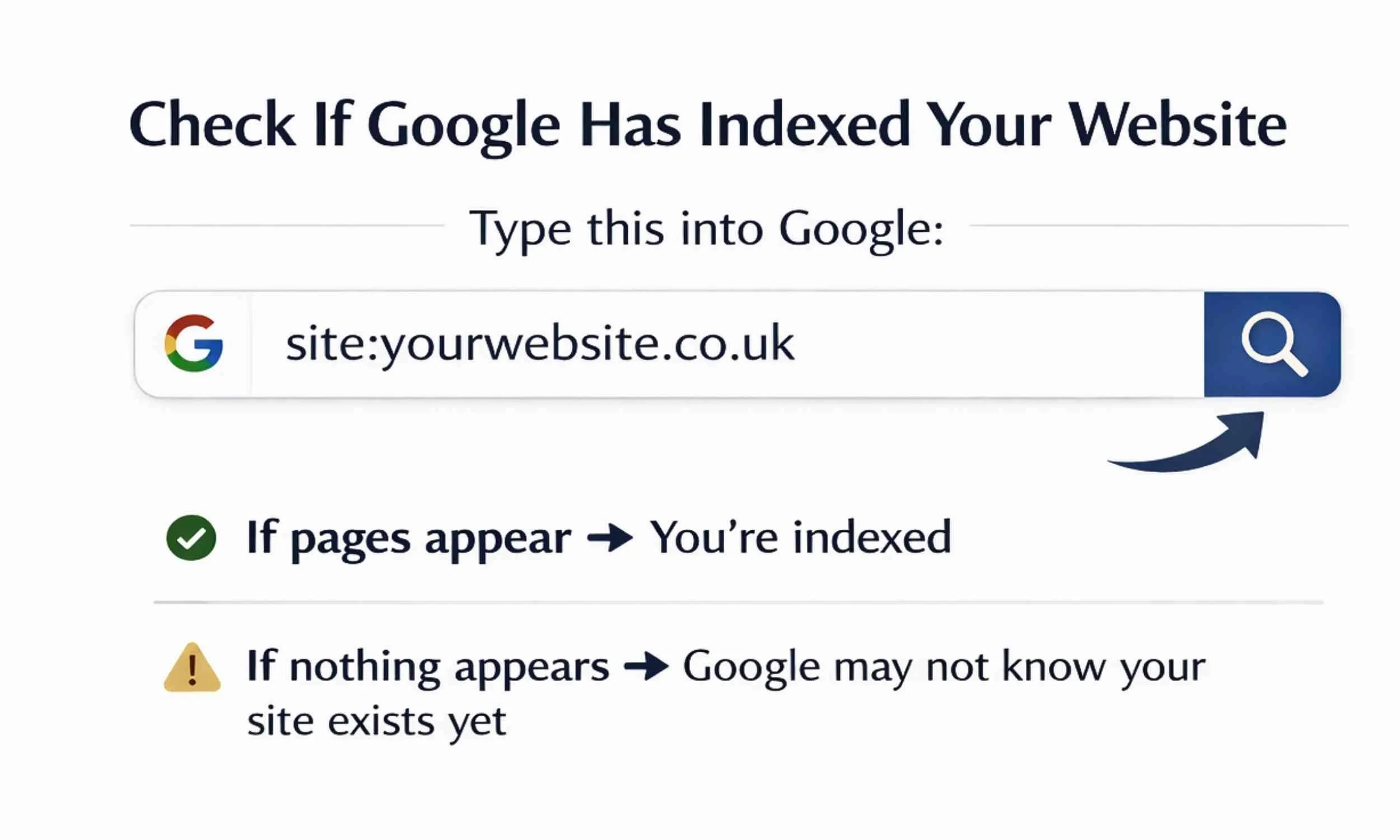
Before You Go Further: Make Sure You’re Indexed
Before assuming you have a strategy issue, check this:
In Google, type: site:yourwebsite.co.uk
If pages appear, your website is indexed.
If nothing appears, Google may not have properly crawled your site yet.
Also check:
Sitemap submission
HTTPS security
Bing still sends traffic in the UK, especially for service-based searches.
If you are indexed and still not getting traffic, the issue is visibility and structure — not existence.
2. How Good Is Your Website, Really?
It’s not just about being online.
It’s about quality.
Ask yourself honestly:
Are your keywords clear?
Does each page clearly target one service or intent?
Or are your headings vague and generic?
Google ranks clarity.
If your homepage does not clearly describe what you do and who you help, it struggles to position you.
If you would like our expert opinion I offer a Free Website Visibility Check, and if you are a new business considering a Website we offer a New Business Online Foundations Check. I will always tell you what is right for your business, even if that is not working with me!
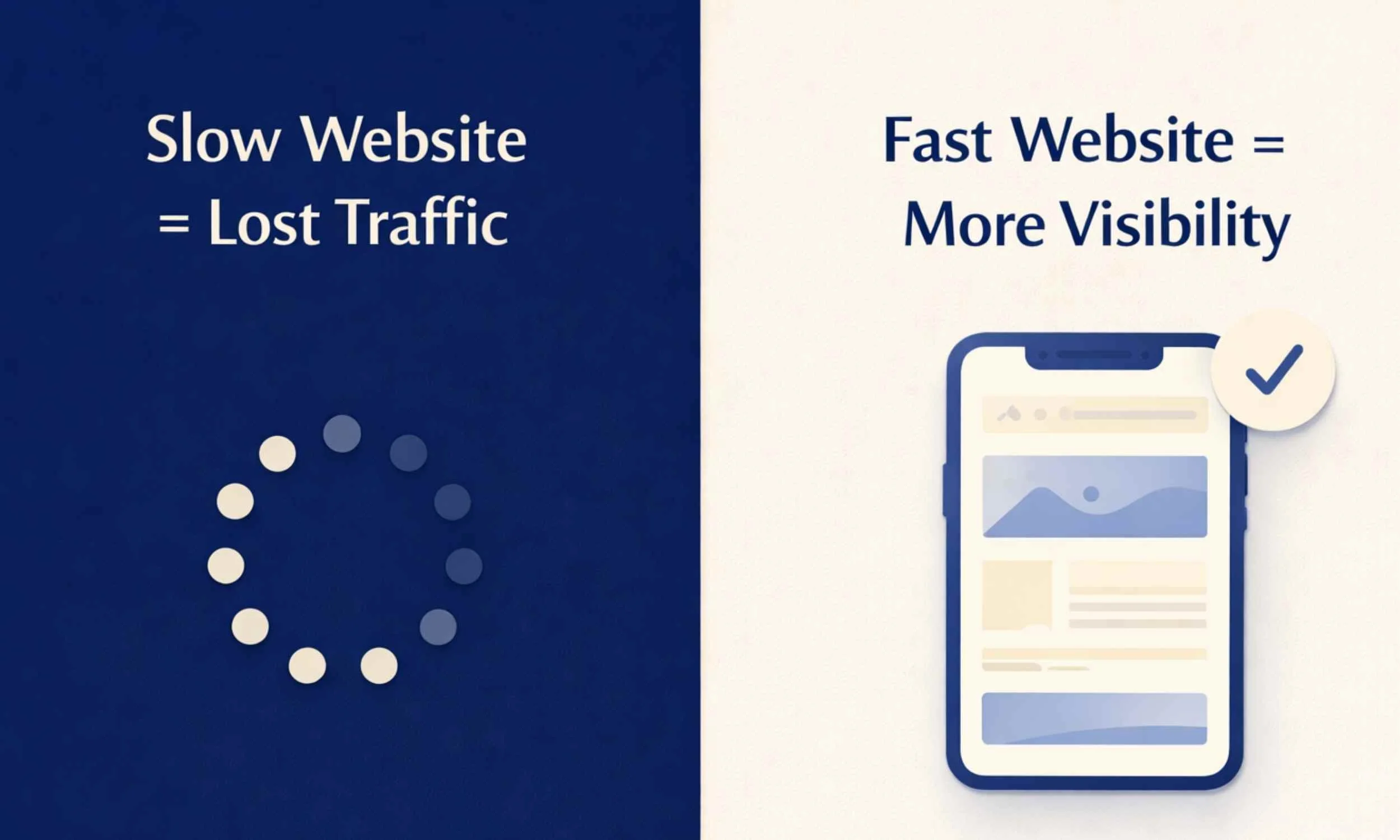
Is your website fast?
If visitors stare at a spinning screen, they leave.
Large, uncompressed images are one of the biggest causes of slow UK small business websites.
Speed isn’t cosmetic. It affects:
User experience
Bounce rate
Ranking signals
Google now factors performance signals such as Core Web Vitals into ranking decisions.
Are your images optimised?
File names like IMG_3492.jpg tell Google nothing.
Images should:
Be compressed
Be correctly sized
Include descriptive alt text
Poor image optimisation quietly reduces performance.
Is your structure logical?
Clear H1. Structured H2s. Internal linking between related pages.
Google reads structure.
If your website is blocks of text and scattered buttons, it struggles to understand your authority.
As we covered in our guide on why simple websites work, clarity almost always outperforms complexity.
3. You Might Be Ranking — Just Too Low to Matter
Being indexed does not mean visible.
If your website sits on page three or four for important service searches, traffic will be minimal.
Most clicks happen in the top few positions.
New UK websites often go through a trust-building period. Google needs to see:
Consistent internal linking
Service clarity
External validation
This takes time. But it also requires structure.
4. You’re Attracting the Wrong Traffic
Traffic volume is not the goal.
Relevant traffic is.
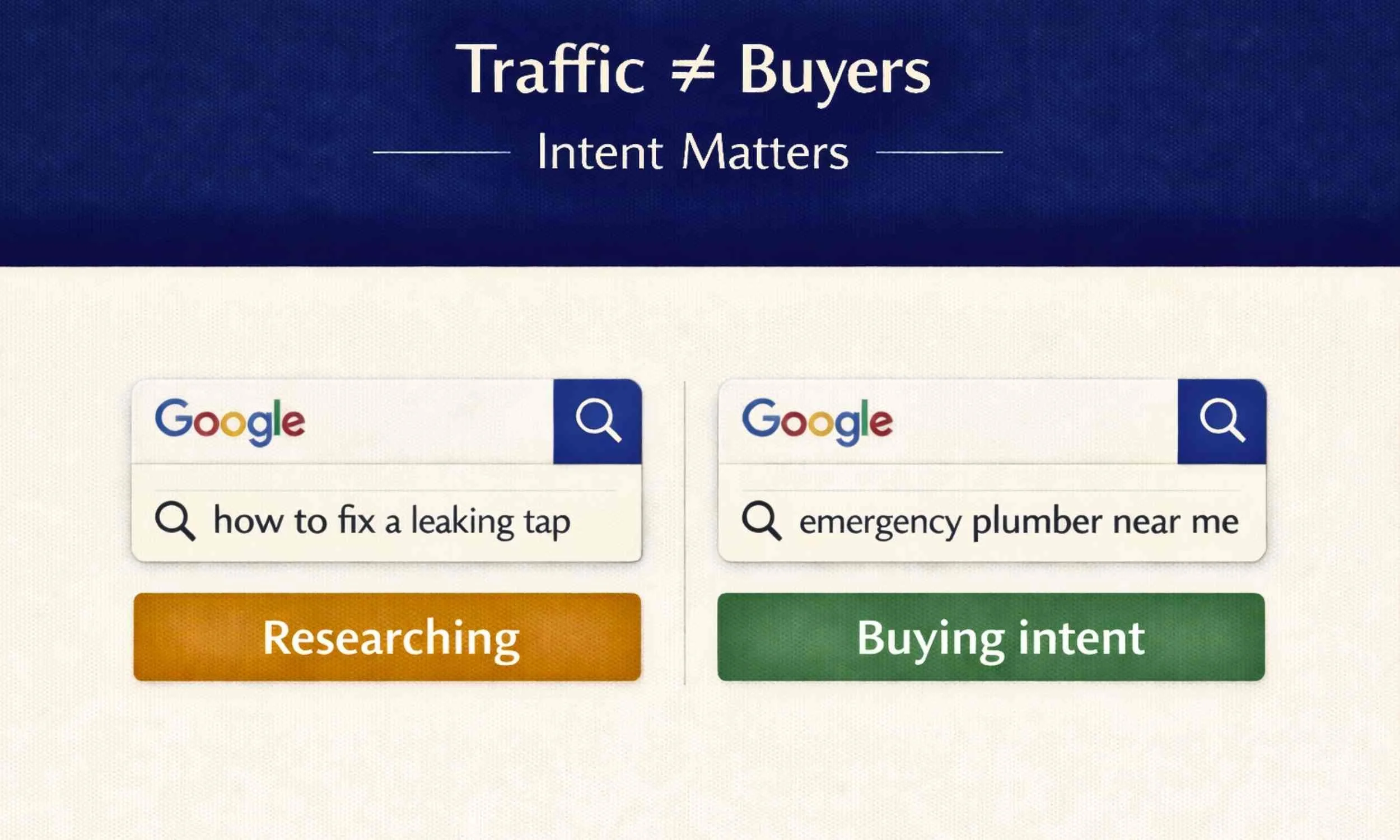
There is a difference between:
“How to build a website”
and
“Website designer for small business UK”
One is curiosity.
One is commercial intent.
If your content attracts researchers rather than buyers, you’ll see visits without enquiries.
That’s a keyword alignment issue.
It requires: Intent-led page titles - Service-focused content - Structured SEO foundations
5. Trust Signals Are Missing
Even when traffic arrives, trust determines whether someone contacts you.
Ask yourself:
Do you show testimonials?
Do you show proof of results?
Is your messaging clear within seconds?
Does your website feel current and professional?
If trust is weak, traffic won’t convert.
Structure builds credibility.
6. Your Technical Foundations May Be Undermining You
Technical gaps quietly reduce visibility.
These issues often don’t break your website — they simply weaken its authority.
For example:
SSL issues
Slow hosting
Broken forms
Poor internal linking
Duplicate metadata
Search engines reward technical clarity.
Many businesses only discover these gaps after launch.
Reviewing domain configuration and security early makes a measurable difference.
7. You Launched — But You Didn’t Build Momentum
A website is infrastructure.
It is not marketing by itself.
To build traffic in the UK, you need:
Internal linking growth
Occasional backlinks
Traffic from email or social channels
When you drive traffic to your website, you reinforce to search engines what your business is about.
Consistency helps Google learn.
Recently we built the Website and created a Google Business Profile for Pasha Flowers, a florist business, focusing on proper SEO structure and Google visibility > Read the Case Study for Pasha Flowers
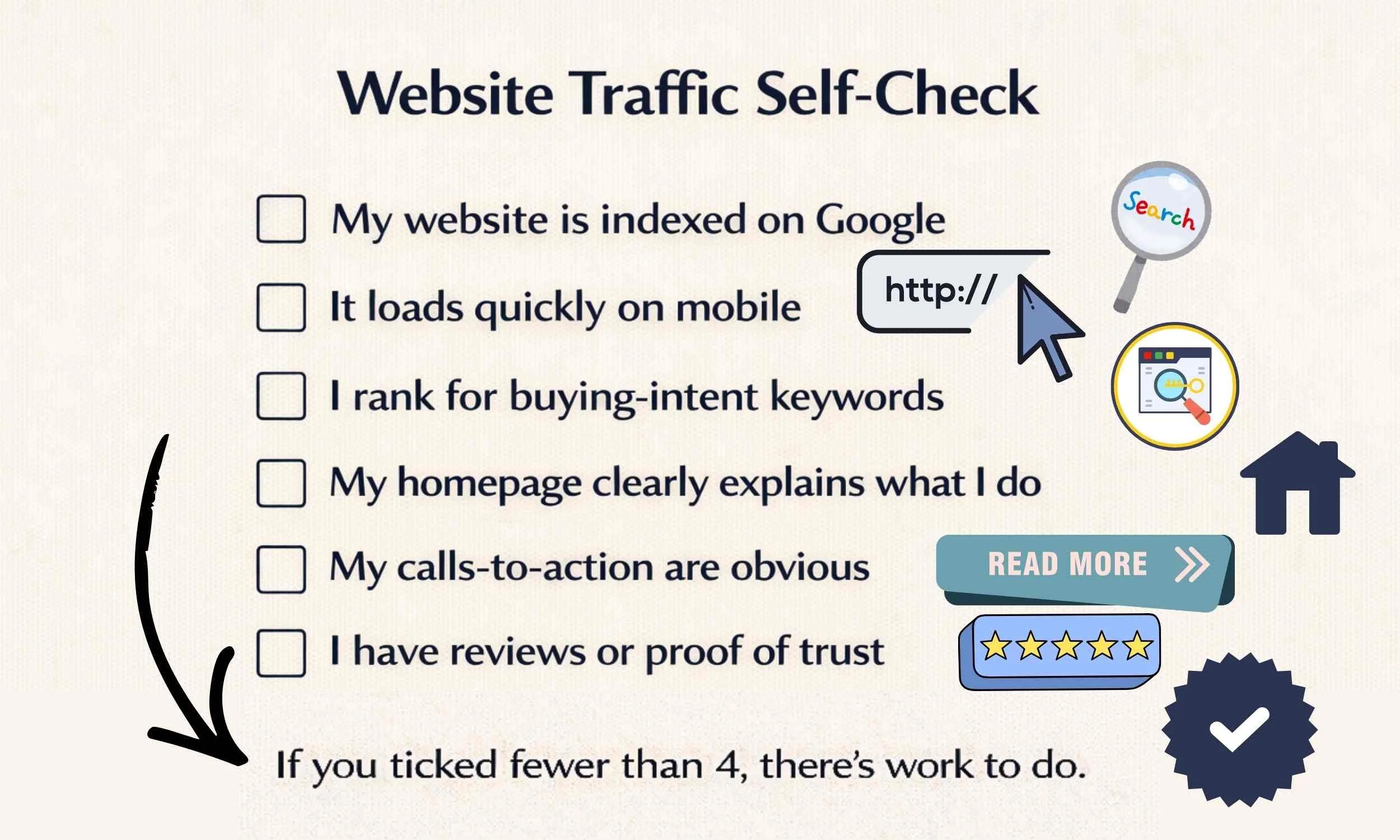
Quick Traffic Reality Check (5-Minute Review)
Can you clearly state the main keyword each page targets?
Does your homepage explain what you do within five seconds?
Does your site load in under three seconds on mobile?
Are your images compressed?
Is your website secure (HTTPS)?
Are you verified in Google Search Console?
Do you have a Google Business Profile?
Are your service pages internally linked?
Have you updated content recently?
If several answers are no, your traffic issue likely has a structural cause.
8. Pulling It All Together
If your website isn’t getting traffic, it’s rarely because Google is “ignoring” you.
It’s usually because one or more foundational elements need attention.
And even when those are corrected, traffic still builds gradually.
Search engines learn through repetition and signals.
When you:
Keep your site technically clean
Maintain visibility channels
Improve structure
Publish relevant content
Drive consistent traffic
You help search engines understand your business.
The websites that grow are rarely the flashiest. They are the clearest.
A website should do more than exist.
It should be:
Clear - Fast - Structured - Relevant - Maintained.
Traffic follows clarity.
Enquiries follow structure.
Both follow consistency.
Website Traffic Self-Audit
Indexing
Does site:yourwebsite.co.uk show results?
→ If no: Verify Search Console and submit your sitemap.
Keyword Clarity
Does each page target one clear service keyword?
→ If no: Refine headings and tighten page structure.
Page Speed
Does your site load quickly on mobile?
→ If no: Compress images and optimise performance.
SSL Security
Does your URL show HTTPS?
→ If no: Fix domain and SSL configuration.
Internal Linking
Are related pages connected logically?
→ If no: Add structured internal links between pages.
Trust Signals
Do you show testimonials or proof?
→ If no: Add visible credibility elements.
Google Business Profile
Are you visible locally in the UK?
→ If no: Optimise and maintain your profile.
Ongoing Activity
Have you updated content in the last three months?
→ If no: Publish structured, relevant blog content.
If you'd like help understanding how your website appears on Google, you can book a Free Website Visibility Check where we review your Google Search Console, SEO, keywords and business listings together.
Frequently Asked Questions About Website Traffic
How long does it take for a new website to get traffic in the UK?
For most new UK small business websites, it can take several months for Google to fully understand and rank your site. Consistent structure, content updates and technical clarity speed this up.
Why is my website indexed but still not getting traffic?
Being indexed only means Google knows your website exists. It does not guarantee visibility. If you are not ranking on page one for relevant searches, traffic will remain low.
Does website speed really affect traffic?
Yes. Slow loading times increase bounce rates and reduce ranking potential. Large image files and poor optimisation are common causes.
FINAL SUGGESTION
If you want to understand how structure, clarity and simplicity influence performance, you can read our Website Guides for Small Businesses